History of Waco, Texas: A Student's Guide to the City's Past

You've probably heard some things about Waco before you arrived at Baylor. The 1993 Branch Davidian siege. The 2015 Twin Peaks shooting. Maybe a vague sense that this place has a complicated past. But if that's all you know about Waco's history, you're missing most of the story — and the most interesting parts.
Waco's real history spans Ice Age mammoths, cattle empires, a bridge built by the same family that built the Brooklyn Bridge, a soft drink invented here a year before Coca-Cola, and one of the most dramatic urban comebacks any mid-sized Texas city has ever pulled off. Here's a guide to the history of Waco, Texas that puts the full picture together.
The First Residents: Waco Indians and the Fort Fisher Era
Long before European settlers arrived, the area where Waco now stands was home to the Huaco people — a Wichita-speaking agricultural tribe who established a village along the Brazos River around 1772. The name "Waco" derives from the Spanish rendering of "Huaco." They farmed, traded, and built a settled community at the confluence of the Brazos and Bosque rivers.
The Texas Rangers entered the picture first. Fort Fisher was established in 1837 as one of the earliest Texas Rangers outposts in Central Texas, serving as a staging point for rangers operating across the frontier. This outpost — not a military fort in the traditional sense, but a ranger headquarters — represents Waco's first recorded Euro-American settlement.
The city was formally incorporated in 1849, just a few years after Texas statehood. By then, the Waco Indians had been pushed from their ancestral land, and a new town was taking shape at one of the few navigable crossings of the Brazos River.
The Cattle Drive Boom and the Suspension Bridge
The decision that shaped Waco's first century was building a bridge.
In 1870, the Waco Suspension Bridge opened across the Brazos River — and at the time of its completion, it was the longest suspension bridge west of the Mississippi River. It was built by the Roebling Wire Rope Company: the same John A. Roebling family that would complete the Brooklyn Bridge just 13 years later. If the engineering pedigree sounds familiar, it should.
The timing was perfect. Post-Civil War Texas cattle drives were moving massive herds north along the Chisholm Trail, and Waco sat directly on the route. The bridge allowed cattle and wagons to cross the Brazos reliably — turning Waco into one of the most important economic hubs in Central Texas almost overnight. Saloons, hotels, and merchants lined the streets serving trail hands passing through.
The railroad arrived in 1871, cementing Waco's position as a trade center. By the 1880s, the city had a cotton market, multiple newspapers, and was growing fast enough to attract something significant: a university.
Baylor Comes to Waco
Baylor University relocated to Waco in 1886, moving from the small town of Independence, Texas after Waco offered land and financial incentives to attract the school. At the time, Baylor was already the oldest continuously operating university in Texas, founded in 1845.
The move was transformative for both the school and the city. Baylor brought students, faculty, a growing infrastructure of boarding houses and shops, and a Baptist cultural influence that shaped Waco's social character for generations. The relationship between the university and the city has never been entirely simple — town-gown tensions are as old as college towns — but there's no understanding modern Waco without understanding how central Baylor has been to its identity for 140 years.
Dr Pepper Was Born Here
Here's a fact that genuinely surprises most people: Dr Pepper was invented in Waco in 1885 — one year before Coca-Cola. Wade Morrison's Old Corner Drug Store on Fourth Street and Austin Avenue is where pharmacist Charles Alderton created the formula. The drink was initially served at the store's soda fountain and became popular enough to be sold commercially within a few years.
The Dr Pepper Museum on South Fifth Street now occupies the building of the Artesian Manufacturing and Bottling Company, the first commercial facility to bottle Dr Pepper. It's one of the most genuinely interesting museums in Waco — not just for the soda history, but for what it captures about late 19th century commercial life in a booming Texas city.
Cotton, Growth, and the Early 20th Century
By the early 1900s, Waco was prospering as one of the largest cotton markets in the South. The 1909 Cotton Palace — a massive annual fair and exposition — drew visitors from across the region and positioned Waco as a cultural and commercial center well beyond its size. The downtown architecture from this era (much of which still stands) reflects that ambition: ornate stone facades, wide commercial streets designed for serious commerce.
The city's population peaked relative to its Texas peers during this period. Waco was, by most measures, one of the most important cities in the state.
The 1953 Tornado: Waco's Deadliest Day
On May 11, 1953, a catastrophic tornado struck downtown Waco. 114 people were killed, making it one of the deadliest tornadoes in Texas history. The storm destroyed or damaged hundreds of buildings and left a scar on the city's physical landscape and collective memory that took decades to fully address.
The disaster accelerated suburban development as residents and businesses moved away from the damaged downtown core — a pattern common to mid-century American cities that would make revitalization much harder decades later.
The 1993 Branch Davidian Siege: Context Matters
The 1993 Branch Davidian standoff is likely what most people outside Texas think of when they hear "Waco." It's worth understanding what actually happened — and where.
The Branch Davidians, led by David Koresh, were a religious group based at Mount Carmel Center in Axtell, Texas — approximately 13 miles east of Waco. The ATF raid on February 28, 1993, the 51-day standoff, and the April 19 fire that killed 76 people (including 28 children) occurred entirely outside Waco city limits in a rural area in a different county.
The event was catastrophic and its causes are still debated by historians and legal scholars. But the persistent association with "Waco" rather than "Elk, Texas" or "McLennan County" reflects how news coverage attached the nearest city name to the crisis. The actual city of Waco, its residents, and Baylor University were largely observers to an event that happened a half-hour away.
Similarly, the 2015 Twin Peaks shooting — a confrontation between rival biker gangs that killed 9 people — took place at a restaurant along Interstate 35. It was a horrific event, but it was isolated: a conflict between criminal organizations that had nothing to do with Waco's character as a city.
The history of Waco, Texas includes these events. It is not defined by them.
The Waco Renaissance: 2010s to Today
The 21st-century transformation of Waco is one of the more remarkable stories in Texas urban history, and it's still ongoing.
Downtown Waco had struggled through decades of suburban flight, retail exodus, and disinvestment — a pattern familiar to mid-sized cities across the South. The turnaround began before Magnolia, but it's hard to overstate how much Chip and Joanna Gaines accelerated it. Magnolia Market at the Silos opened on the site of a former grain elevator complex in 2015, and the effect was rapid: new hotels, new restaurants, renovation investment, and a sudden national interest in Waco as a destination rather than just a throughway.
The Brazos riverfront saw major investment. New breweries, restaurants, and coffee shops opened in neighborhoods that had been stagnant for years. Baylor's campus expanded significantly. The Waco Mammoth National Monument — a site where the remains of a Columbian mammoth nursery herd were discovered in 1978 — received federal designation in 2015, adding a world-class natural history site to the city's visitor attractions.
Today Waco has a population of roughly 140,000 in the city proper and about 270,000 in the metropolitan area. It has more quality restaurants per capita than cities twice its size, a genuine arts and museum scene, and a downtown worth actually spending time in.
Walking Waco's History
The physical remnants of Waco's past are worth exploring in person. The Waco Suspension Bridge (1870) still stands and functions as a pedestrian bridge connecting downtown to Cameron Park — one of the largest urban parks in the country at over 400 acres. Walking across it, you're crossing the same span that cattle herds crossed on the Chisholm Trail.
The Texas Ranger Hall of Fame & Museum carries the state's official designation for preserving Texas Rangers history — including the Fort Fisher connection to Waco's founding. The Mayborn Museum Complex at Baylor covers both natural and cultural history with one of the better science museum experiences in Central Texas.
The Waco Suspension Bridge and Riverwalk area ties together multiple historical layers in one walkable stretch: the bridge itself, the Indian Spring Park, the Brazos walking trails, and views toward downtown's 19th-century commercial architecture.
Centre's Corner of Waco History
The South Waco neighborhood where Centre sits was part of the city's original 1870s cattle-drive economy — the area between downtown and the Brazos River was where drovers, merchants, and workers lived during Waco's boom years. When Baylor relocated in 1886, South Campus grew up around the university's edge, creating the residential fabric that still defines the neighborhood.
If you're curious about the city you're living in for the next few years, start with a walk across the Suspension Bridge, stop by the Dr Pepper Museum, and spend an afternoon at the Texas Ranger Hall of Fame. The history is better than the reputation.
Living in Waco
Understanding where a city comes from helps you understand where it's going. Waco's trajectory right now is upward — more investment, more development, a growing food scene, and a university that's expanding its footprint and national reputation.
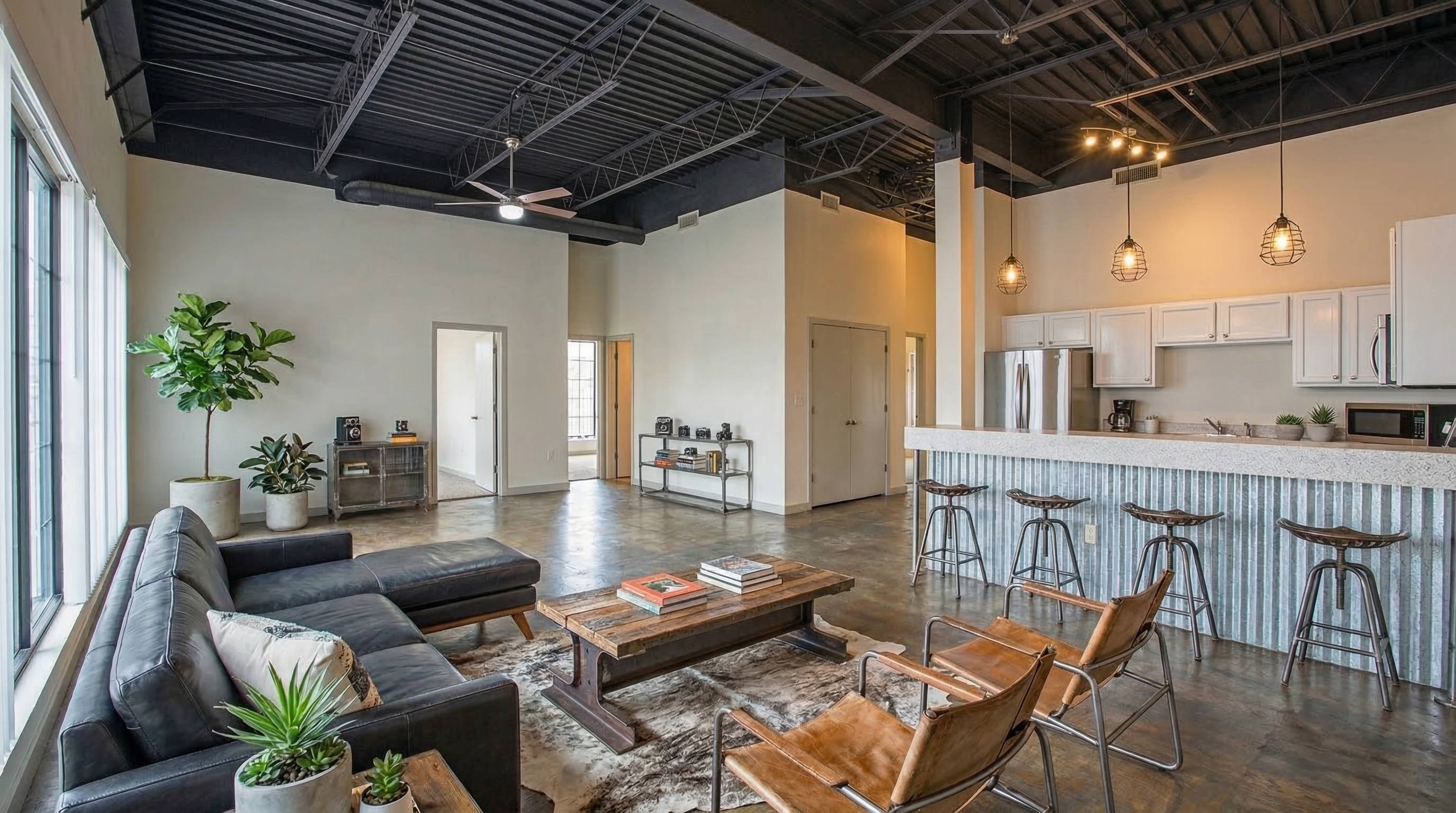
If you're deciding where to live near Baylor, Centre Apartments puts you in the middle of this history at 1901 S 11th Street — walking distance to campus, close to downtown, and in the neighborhood that has been part of Waco's story since the 1880s. Browse our floor plans, explore the neighborhood, or schedule a tour to see what life here actually looks like.
Waco is a more interesting city than most people give it credit for. Once you dig into its history, that becomes obvious.