Baylor Pre-Med: Requirements, Timeline, and What to Know Before You Start

Choosing Baylor for pre-medicine means committing to four of the most demanding years of your academic life in one of the best mid-sized cities in Texas. Whether you're a high school senior weighing your options or a freshman just declared pre-health, understanding exactly what the baylor pre med track entails — the courses, the timeline, the shadowing hours, the MCAT — will save you a semester of guessing.
This is the guide that Baylor's prehealth website doesn't write: the practical reality of the pre-med path at Baylor, from your first biochemistry exam to your medical school application.
What Baylor Pre-Med Actually Requires
Baylor's pre-medicine track is not a standalone major. You can pursue baylor university pre med while majoring in biology, biochemistry, neuroscience, chemistry, or even English — what matters is completing the required prerequisites and maintaining competitive stats.
The core baylor pre med requirements that medical schools expect:
- Biology: BIO 1305/1105 + BIO 1306/1106 (Modern Concepts of Bioscience, two semesters with labs)
- Chemistry: CHE 1301/1101 + CHE 1302/1102 (General Chemistry I & II with labs), followed by Organic Chemistry I & II
- Mathematics: MTH 1321 (Calculus I) and MTH 1322 (Calculus II) or a statistics course
- Physics: PHY 1408/1108 + PHY 1409/1109 (two semesters with labs)
- Psychology and Sociology: PSY 1305 and SOC 1305 — both tested heavily on the MCAT, and lighter courses relative to your science load
- PHP 1105 (Foundations of Medicine): Not a hard prerequisite for medical school, but Baylor's prehealth advising office considers this the most important class for incoming pre-med freshmen. It introduces clinical medicine, connects you with healthcare professionals, and helps you confirm that you actually want to pursue medicine before you've invested three years in prerequisites.
One practical note: start PHP 1105 in your first semester if at all possible. Students who take it early report higher confidence in their major choice and better early relationships with prehealth advisors.
The Four-Year Course Roadmap
Most students pursuing the baylor pre med program follow this general path:
Freshman year: BIO I & II, CHE I, MTH 1321, PHP 1105. Take PSY 1305 and SOC 1305 early — they're lighter courses that satisfy MCAT requirements while protecting your GPA. Don't overload with labs in a single semester.
Sophomore year: Organic Chemistry I & II (the filter courses — prioritize these over everything else second year), Physics I, continue toward your declared major's requirements.
Junior year: Complete remaining prerequisites, begin MCAT prep in January, take the MCAT in April or May, submit medical school primary applications in June. This is the crunch year. Students who haven't planned their living situation carefully end up scrambling when they realize they need a quiet, stable home base during peak MCAT prep season.
Senior year: Secondary applications, interviews, decisions. If you're applying to MD programs, expect to travel for interviews August through February. A flexible apartment lease — not a dorm with rigid exit policies — gives you that flexibility.
Maintain a 3.0+ cumulative GPA to remain designated pre-med with Baylor's prehealth advising office. Competitive medical school applicants typically carry 3.6+ science GPAs and 3.7+ overall.
Medical School Acceptance Rates: How Baylor Stacks Up
The headline number: Baylor pre-med students achieve roughly 60% acceptance rates to medical school — significantly above the national average of around 40%. That's a meaningful advantage when you're choosing where to spend four years.
The nuance: Baylor College of Medicine specifically has a 3.46% acceptance rate (fewer than 4 of every 100 applicants), with a median MCAT of 519 and median GPA of 3.96. If BCM is your target, plan for an extraordinarily competitive application.
For the broader MD landscape, Baylor's prehealth advising office, strong clinical pipeline through Baylor Scott & White Health, and established research opportunities give students genuine advantages over self-guided pre-med programs at other universities.
The Activities That Actually Matter (Beyond Your GPA)
Medical school admissions care about three categories beyond academics: clinical exposure, research, and service.
Clinical shadowing: Baylor Scott & White Medical Center – Hillcrest is the primary clinical site, located less than two miles from Baylor's campus. Many students arrange shadowing in cardiology, emergency medicine, and surgery through prehealth advising connections. Start sophomore year — most competitive applicants have 100–200+ shadowing hours by application time.
Research: Baylor has active research labs in neuroscience, biochemistry, and biomedical sciences. The Baylor Pre-Medical Practicum Program (BU-MPP) is a structured pathway that pairs students with physician mentors. Apply early — spots are competitive.
Service: The MCAT weights service and community engagement. Waco has significant opportunities through Mission Waco, Family Health Center, and student-run health clinics. Student organizations at Baylor — including pre-med-specific clubs — connect students with meaningful opportunities.
Summers are critical. Students who land research internships or clinical experience between sophomore and junior years tend to have stronger applications than those who work unrelated jobs. Having your own apartment to return to between summers (rather than losing dorm housing each May) means you can hold year-round positions more easily.
How Where You Live Affects Your Pre-Med Performance
This is what most pre-med guides skip entirely: your living situation has a real effect on your performance in demanding science courses.
Pre-med at Baylor is not a 9-to-5 commitment. You have early morning lab sections, late library sessions during MCAT prep, and clinical hours that don't follow a neat schedule. When you live within walking distance of campus, you eliminate 30–40 minutes of daily commuting from an already packed day.
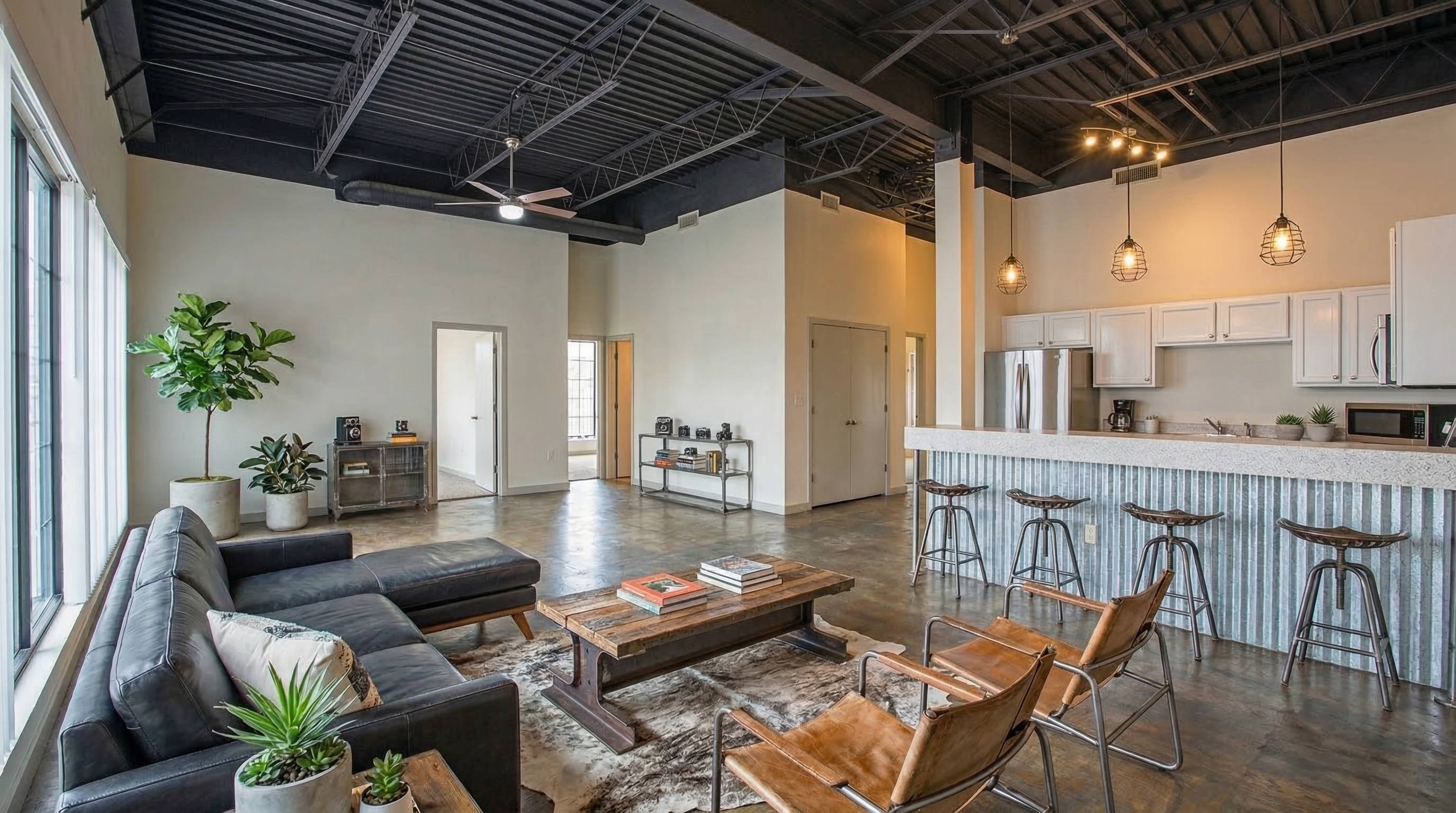
Centre Apartments sits at 1901 S 11th Street — walking distance to Baylor's science buildings, the Moody Memorial Library, and the McLane Student Life Center. Every unit includes washer/dryer, high-speed internet, and parking. There's no extra bill for internet (which you'll need for MCAT prep platforms like Anki and UWorld), and no commute eating into study blocks.
For pre-med students specifically, the two-bedroom floor plan is the most common choice — splitting with one pre-med roommate brings your per-person cost well below dorm room rates while giving you a real desk, a quiet bedroom, and a kitchen for meal prep during long study weeks. If you're coordinating with two other pre-med friends, the three-bedroom floor plan makes per-person costs even more competitive.
What to Budget as a Pre-Med Student
Pre-med students often stay in Waco beyond four years — doing research years, taking gap years near clinical mentors, or completing post-bacc coursework at Baylor. Budget accordingly:
- Average Waco 2BR apartment (shared): $700–$900/person/month
- Centre includes internet, washer/dryer, and parking — three line items that add $100–$175/month at complexes that charge separately
- Baylor Scott & White – Hillcrest (your primary shadowing site) is a short drive from South Waco
For a full breakdown of what it costs to live near campus, see the Baylor student budget guide. For context on how off-campus costs compare to dorm costs year by year, the Baylor housing costs by year post breaks it down clearly.
Lock In Your Pre-Med Home Base Early
Pre-med at Baylor is achievable — the 60% medical school acceptance rate proves it. But the students who succeed tend to share one thing: stability. Stable housing, stable routines, and a commute that doesn't drain them before they reach the library.
The best apartments near Baylor fill fast each fall. If you're starting your pre-med track alongside your housing search, schedule a tour of Centre to see the floor plans and neighborhood in person. Four years of consistent, walkable housing near campus is one of the best investments you can make in a demanding pre-med journey.